
Objects & Experiences
When I began this substack it was about objects.. the things I've bought... but has morphed into experiences... the things I've done. They are 2 sides of the same thing I think

My Reliquary
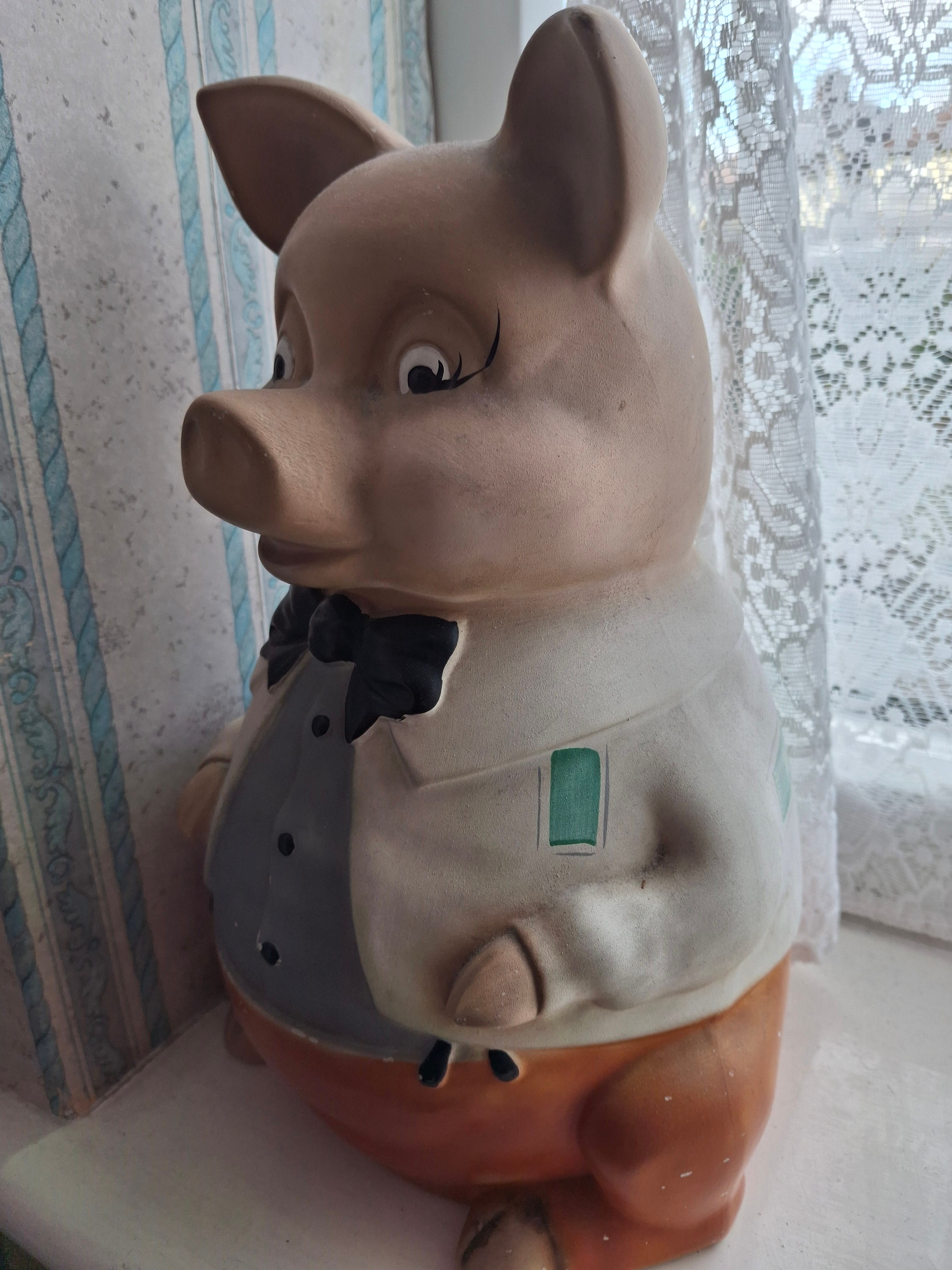
Occasionally, I find myself so in love with a word that I try and write pieces that can use it. I’ve previously been enamoured of carapace, and more recently, I’ve been finding reasons to use the reliquary. A reliquary is, of course, a place to store, relics. Of all our Christian myths, I think the relic is one that touches on more ancient traditions. Objects become relics when they are attached to the memory of a person or a time.
Spending a lot of time in the house where I grew up, in the eighteen months since my mum died, I have found myself back in my teenage bedroom. I would sleep in here from when I was thirteen till I left for university at eighteen, and again, on finishing university for six months. At some point, though, probably around the time my nephews were born, it stopped being “my” room, though a large fitted wardrobe at the end was still full of toys, for a long time, a few of which still remain. Two beds replaced one, and its only more recently that I’ve gone back to sleeping there when I visit dad.
On the windowsill, and on the walls, are a number of objects, that I’ve begun to realise are my own reliquary. Whilst the shelves and teenage furniture were removed, and the wallpaper renewed, a few things stayed behind to make this bedroom, only very occasionally in use, appear “lived in.”
From left to right on the windowsill are my childhood piggy bank, itself a hand-me-down, probably from my mum, and according to a similar listing on eBay, from the 1950s; next is a little ornament I bought back from University or which they bought when visiting, from Glasson Dock, the picturesque village a few miles from Lancaster; further along is a little Direct Line replica telephone, that used to make a sound but has long since stopped working. I got this for my mum (and a Churchill dog), when I briefly worked there in my last corporate job in the mid-1990s. And last of all, a Christmas present from her that never quite made it out of the house, a kitsch owl ornament, bought because it was, like me, reading a book.
On the wall is a faded Monet print, in a cheap snap frame, and an equally faded framed certificated from 1995, when my unpublished novel “Lineage” was shortlisted for the Lichfield Prize, the first time that my writing ever got any recognition outside of friends and family.
These are small things, I realise, and when you go back to a place, where one of people who made it a home is no longer there, it is absence rather than presence that you feel.
Still the King
I didn’t expect one of the year’s early musical highlights to be a concert film by Elvis Presley. “EPiC” (Elvis Presley in Concert) came out of Baz Luhrmann’s archival work whilst researching his Elvis biopic. Reels of film outtakes were discovered in the archive, without sound, as well as an unheard interview tape. These elements form the basis of the new movie.
Presley was one of the most filmed and photographed men of the century, yet there’s still something compelling about seeing these images on the screen. Like Peter Jackson’s “Get Back”, the outtakes are used to tell a different story than would have been shown at the time - when the “product” was a more traditional “in concert” movie.
Elvis’s Vegas tenure began well, it was only over the years, worked to death by Col. Tom Parker’s gambling debts to the Casino gangsters, that it took its toll. Here we have Elvis, relatively fresh from the NBC TV special, and with new hits such as “Always on My Mind” and “Suspicious Minds” his last era as a chart topping artist. He looks fantastic on the big screen, and close-up. The visuals have been synced with the live recordings from the time in a seamless way - and the film is itself a montage of these performances, cut up with those interview segments, and other parts of the story. It is mostly Elvis that we hear, in voice and in song.
That Vegas Elvis had for a long time been seen as some kind of parody. The Elvis-lookalikes tend to don the sideburns, sunglasses and the sequinned jumpsuit. But here, it feels reclaimed. Elvis says that when people are at home they just listen to the records, but when they come to see him they want to “see a show.” And that’s what he gives them.
The rehearsals with the core band are revelatory - Elvis as bandmaster, working on a vast array of songs. Live, his band have rehearsed 160 songs, so that on any one night, they can change the flow. By the time they get to Vegas, they have a full show band, a true spectacle, with horns, strings, and male and female backing singers. There’s something wonderful about this footage, a vast stage, with twenty or more players, and at its centre, Elvis in that jumpsuit, giving it his all.
For its the voice always that makes the difference - whether playing old rock and roll numbers, the sort of gospel tunes that he sung in church, or his newer hits, including covers of the Beatles and Simon and Garfunkel. The footage of one of his last great rockers, “Polk Salad Annie”, a dirty (in every sense), southern blues, is remarkable - and it was one of the staples of his Vegas set for years. Its impossible to see or hear the joins between different takes - that song sees three versions of the visuals interpolated, from rehearsal to live show, but the music is uninterrupted.
I watched “EPiC” at my local multiplex on a wet Friday afternoon, and its a compelling ninety minutes. The cinema was reasonably full, though I was one of the youngest there. If the biopic couldn’t really escape the sadness and trauma of Elvis’s later life, this reclaims the good times. Interviewed about whether he supported musicians refusing the draft in Vietnam, Elvis refuses to say a thing. Yet, the music, and the multi-racial line-up of his stage show, have a quiet politics to it. If he was drawn to sad songs and the Vegas show encouraged over the top ballads, there’s still those great southern soul songs he sings, “Suspicious Minds”, “In the Ghetto” and “Walk in My Shoes.”
The film ends (or nearly ends) with a beat poem by Bono - its neither terrible or particularly necessary from the singer of “Elvis Presley and America.” Elvis’s recording career, remember, was little more than 23 years from faltering start to tragic end, which is about the same as, say, Kings of Leon or Interpol, to give it some perspective, but in that time, he never stopped working - and lived through several epochs of change, yet we’re now nearly half a century with him gone.
The Scene that Celebrates Itself
In the post-Xmas quiet there isn’t much going on literature wise, which may explain the packed house for the above/ground press launch on Thursday. Most of the literary folks in Manchester that I know were at Saul Hay Gallery for David Gaffney, Tom Jenks and Lydia Unsworth. I arrived on time, yet was one of the last ones there, which prompted an early start.
above/ground is a Canadian press publishes small pamphlets, and via some transatlantic links, reminiscent of the old mail-art networks of the sixties and seventies, has found a home for a number of Manchester-adjacent writers. David Gaffney’s stories lean into his earlier “sawn-off tales” but began as explorations of the similarities/differences between prose poetry and flash fiction. If there’s a difference between these, and his earlier work, I think its that it is in the ever-more deadpan absurdity, and embracing of surrealism. In some ways, it was as much a Dada-esque happening as a reading, though without the silly hats. (Maybe, next time.) Despite the humour of the pieces, there’s always a nugget of dark truth in David’s work. The first story, about a next generation of Arts Council staff being grown as clones, was a perfect example. In David’s work the mundane, is never mundane - whether a train journey across a Lincolnshire landscape that looks as if its been “photocopied”, or the absurdity of office politics. The book “Lakes of Titan” is available here.
Tom Jenks can sometimes seem like a P.T. Barnum of contemporary writing, and all he needs is a big coat with his bric-a-brac for sale to complete the image. The “badge” he was flogging for those of us who spend too much time in pointless meetings, “i’m an artist and you’re lucky i’m even here” sold like hotcakes. Tom’s work veers between the minimal (the badges, his posters of famous literary works) and the durational (projects mapping everything he has done in a year around a particular theme.) Yet here he engages with a range of pithy word-pictures, poignant yet funny.
Lydia Unsworth has slightly different tone than the other two. She has four pamphlets from above/ground and a recent publication just out from Knives, Forks and Spoons. It is a free spirited observational poetry that is probably at its best in the longer piece where she lists all the mundane but beautiful things that she experiences with her children on the everyday walk to school. Her books can be bought here.
First Sightings
We live in a fragmented creative world, where the audience for challenging literature is vanishingly small. Yet, that’s always been the case. As an event like Thursday showcases, there is much talent on display, even at the so-called margins of practice. Writers existing outside the mainstream publishing industry, and even outside of academia, can still have an outsized influence on those that engage with them.
I am always interested in where works originate, particularly when they deviate from what we now know. Readers would have first encountered “Wuthering Heights” as a novel by Ellis Bell, “brother” of Currer Bell, the author of “Jane Eyre.” Shakespeare’s first folio was published after his death. Our cinemas this spring are full of “Wuthering Heights” and “Hamnet”, derivative works by two other women.
The stories of J.D. Salinger, appeared first appeared in the New Yorker. The magazine would add the byline only at the end, and then, as now, the stories would be spread out over many pages, interspersed with cartoons or advertisements.
One of the most acclaimed novels of the 2000s “The Brief Wondrous Life of Oscar Wao” by Junot Diaz was originally published in a much shorter version several years before the novel. Readers of “Infinite Jest” would have encountered extracts in various magazines in the years before its publication.
James Joyce struggled to get his work published for much of his life, coming up against layers of censorship meaning he struggled to find publishers, they struggled to get it printed, and when it was printed, there was always the risk of it being seized under obscenity laws.
“Ulysses” first readers weren’t then, just the 1000 subscribers to Sylvia Beach’s subscription edition, but the readers of the various chapters as they appeared in literary magazines. The nature of the literary magazines - almost always on subscription rather than on a news stand , and the sense that only a certain type of reader would subscribe - meant that they were where more experimental material could be published.
Cultivating the relationship with a new magazine, “The Little Magazine”, Ezra Pound agreed that Joyce would contribute regularly, and so the first version of “Ulysses” was made available to a small subscription list. Last week I picked up an intriguing book which reprints “Ulysses” from “The Little Magazine”. This, like the following “Finnegan’s Wake”, was also a “work in progress”, and the version published is around half the length of the version we now know. Also, though they aimed to publish the whole novel, the publication stopped following an obscenity trial, for which the editors were fined.
So its first readers were almost like testers for the work - and the book gives both the background of its publication and some of the correspondence received regarding its merits or otherwise.
I think nowadays we tend to think of a book as a final work - yet there are many examples where it is, itself, an anthology or a revision.
Two Years Already
It has been close to two years since my short story collection “Loners” came out from Confingo Press. Whilst the world changes, literature doesn’t have to date. Indeed, I’m struck by how the themes of the book seem ever relevant, whether the personal trauma of “The Cat”, the apocalypticism of “Static Caravans” or the precarity highlighted in “A Cold Night for Drowning.” A short story is always a microcosm, I think, but none the worse for it.
You can still get a copy from here and the latest in the series, all combining artists with writers, is out from my friend Elizabeth Baines now.
And as I mentioned last month, my latest short story, “Month of the Lilies”, is now available online at Litro Magazine. Link from website here.